
Painted dog conservation · Zimbabwe
A future for the pack.
An injured painted dog may be unable to hunt, yet its pack can keep it alive by bringing food back. In Zimbabwe, researchers are following these deeply social animals across a landscape where the survival of one dog can matter to an entire family.
Get expedition dates and application openings by email.
Dates coming soon · Limited places · Application only
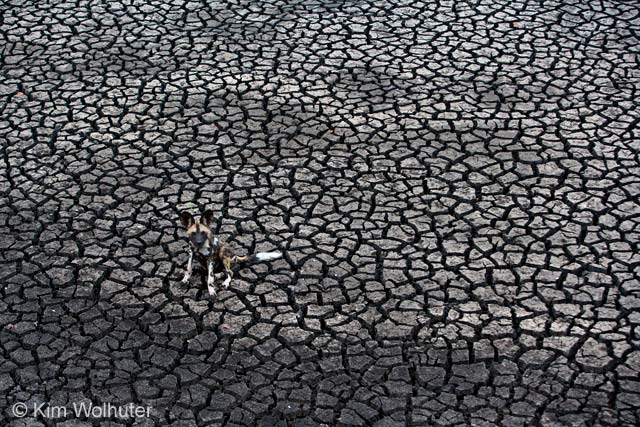
Photography by Kim Wolhuter
Dog days · Species photograph
The ones who come back for you.
Watch a painted dog pack long enough and the hunt becomes only one part of the story. Adults return with food for the young. A dog stays behind to guard the pups while the others leave to forage. When a pack member is injured, others can feed it, clean its wounds and keep watch beside it.
Each animal has its own pattern of black, white and gold. For researchers who follow them over years, those markings become a way of knowing individuals and tracing their lives. A pack is a network of relationships: siblings that grow up together, adults raising the next litter, young dogs eventually leaving to find companions and form a family of their own.
Their world has no borders.
A painted dog’s life can carry it far beyond the boundaries of a national park. In northwestern Zimbabwe, its route may pass through protected land, forestry areas, private reserves and places where people live and farm. The country between those places matters as much as the places themselves.
Long-term field research follows those movements and the dangers along the way. A road crossing can expose a pack to fast traffic; a wire snare can catch an animal for which it was never intended. Tracking helps conservationists understand where the pressure falls, informing work from anti-snare collars to roadside warnings. Zimbabwe also connects painted dog populations across neighbouring countries, making safe passage here part of a much wider story.
Learning to read the country.
Near Victoria Falls, a field research centre is also a place where Zimbabwean students learn the work of conservation. With mentoring, financial support and time in the field, they develop the skills to ask questions, gather evidence and turn what they learn into protection for wildlife.
The work reaches local schools and communities too. Children encounter the animals and habitats around them through conservation clubs and bush camps, while researchers and educators work with people who share the dogs’ range. The next person to follow a pack across this country may first have discovered it in a classroom. Supporting that education helps keep knowledge of the landscape in the hands of the people who will care for it.
The expedition
See the pack through their eyes.
This expedition is for a small group ready to spend time with the questions behind conservation: how a pack lives, what threatens it and what years of patient research can reveal. Learning from the field team and the Zimbabwean students growing into that work will shape the experience, with support directed towards the team’s priorities.
Dates coming soon. Join the waitlist to hear when applications open.
Dates coming soon · Limited places · Application only
Join the
waitlist.
Join the waitlist for Zimbabwe. We’ll email you when dates are announced and applications open.
Places on every expedition will be very limited. All places are offered by application.
Joining the waitlist does not reserve a place.